Do you ever wonder why a beautifully decorated room might feel a bit off? It might be the lighting.
Most homes rely on a single overhead fixture, but great design never does. The difference between a basic room and a well designed space can be as simple as layered lighting.
Just having light from the ceiling can make a room feel flat and create unflattering shadows on people's faces.
Yes, that light fixture provides light, but you can do better.
Having a layered lighting strategy can affect the mood of your room, can bring more light to an area where you are performing a task, and can make a room look more interesting.
Here is how to create a layered lighting plan for any room in your home.
 AI-assisted image | Human-editedDifferent Types of Lighting
To create a layered lighting plan, you first need to understand the role each type of lighting plays.
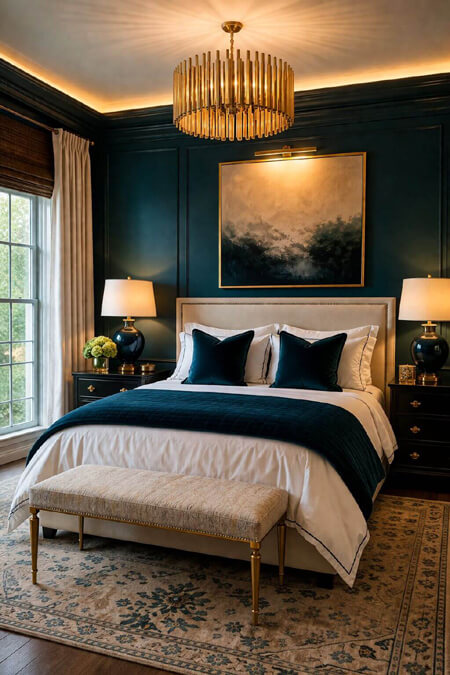
There are 4 main types of lighting - ambient lighting, task lighting, accent lighting, and decorative lighting.
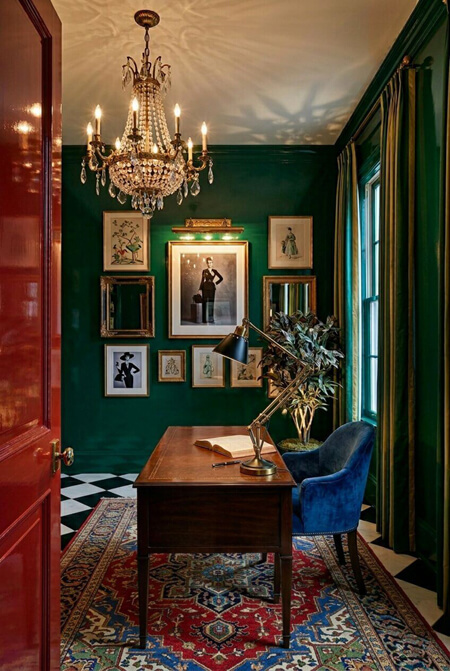
Ambient lighting is general lighting that will be the foundation of your layered lighting plan. Ambient lighting is typically lighting found in your ceiling that illuminates the entire room.
Task lighting is lighting directed towards a particular part of your room where a task might take place. Examples of task lighting are a piano light, under cabinet lighting in a kitchen, or a reading lamp.
Accent lighting illuminates something that you want highlighted, such as an art light above a painting or an uplight behind a plant casting unique shadows on the wall. Accent lighting is also very popular below textural surfaces (such as brick or stone) to highlight the texture, which is called wall grazing.
Decorative lighting is where the light fixture is decorative, such as a chandelier that is pretty but is also a light fixture.
 AI-assisted image | Human-editedMultiple Light Sources
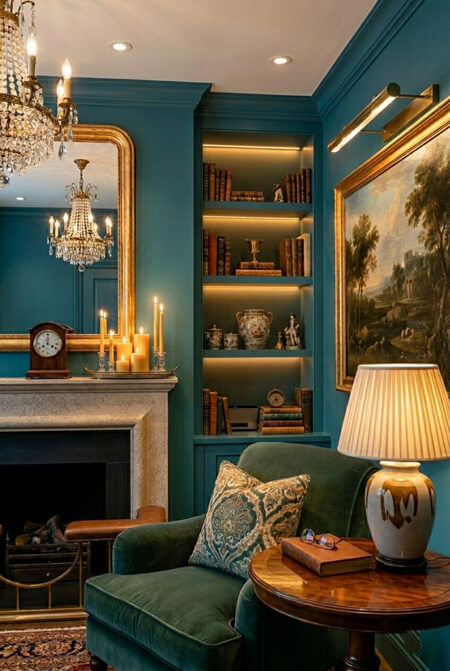
Interior designers consistently use layered lighting to create depth, mood, and functionality in every space.
Multiple light sources eliminate harsh shadows and allow your eye to move comfortably around the room. This creates a softer, more inviting atmosphere that feels professionally designed.
When adding layers of light to the rooms of your home, try to use at least 2 or 3 different types of lighting per room.
More utilitarian rooms like a laundry room can use just basic ambient light, however rooms where you linger should have more.
Consider your lighting at floor level, seated eye level, standing eye level, and ceiling level.
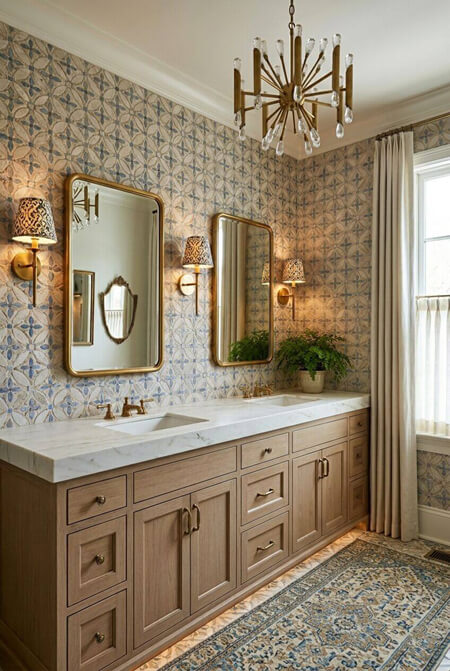
For example, a living room can have lamps on all of the end tables, a wall sconce on either side of the fireplace, and recessed can lights in the ceiling. A dining room can have a chandelier and art lights above all artwork. A bathroom can have wall sconces on the sides of each mirror (not the top that creates unflattering shadows) as well as an overhead chandelier.
Using multiple light sources allow you to change the lighting to suit your occasion, mood, and time of day.
 AI-assisted image | Human-editedDon't Forget About Natural Light
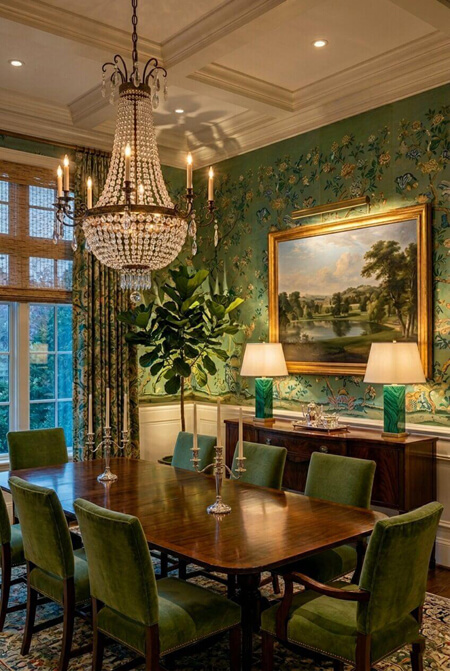
Natural light changes color and intensity throughout the day, so you need to make sure to consider how your layered lighting plan will look with light coming through your windows.
Consider hanging your curtains high and wide to make your windows look bigger and maximize the natural light coming into your home.
If you have a glare from the sun coming into your home during certain times of day, make sure to use window coverings so the glare is not too harsh.
Sheer curtains are a good solution for allowing light though your windows while reducing glare.
Designers often layer window treatments, such as combining sheer curtains with heavier drapes, so you can control both light and privacy throughout the day.
 AI-assisted image | Human-editedColor Temperature
When creating a layered lighting plan, you must consider color temperature.
The color temperature of light bulbs is measured on a scale called Kelvin, shortened to the letter K.
On your box of light bulbs, the color temperature will be listed.
The higher the number, the more blue the light. The lower the number, the more yellow the light.
Most designers agree that 2700K is the best color temperature for light bulbs in a home since it is calming. 3000K is also a good color temperature if you prefer a slightly cooler color.
You might prefer lighting with a color temperature of 4000K or 5000K that is closer to the color of daylight in a garage or workshop to be a more energizing light to help keep you alert while performing tasks.
Make sure to have the same color temperature on all light bulbs in the same room.
 AI-assisted image | Human-editedColor Rendering Index
Another rating to look for on your light bulb box is CRI, which stands for Color Rendering Index.
The CRI scale is from 0 - 100 with 100 being the best.
Most designers prefer a CRI of at least 90, which might cost $1-$2 more than the cheap light bulbs, but are worth the extra price for high quality.
Light bulbs with a CRI less than 90 tend to show colors looking more gray, washed out, or muddy and can make skin tone look sickly.
If CRI is not listed on your light bulb box, then it is likely lower than 90.
 AI-assisted image | Human-editedOutside
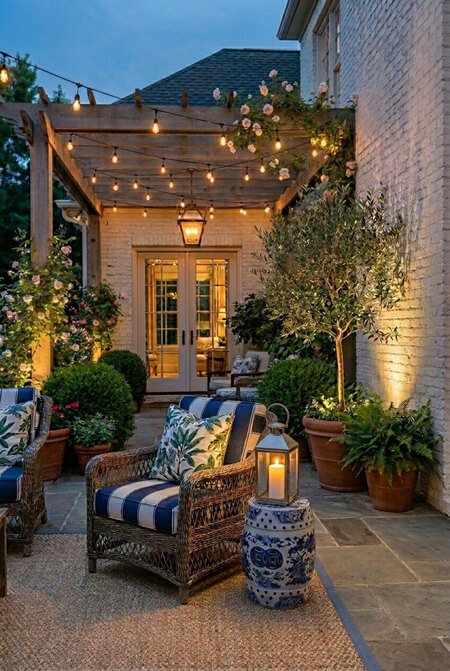
Don't forget about the outside of your home when creating a lighting plan.
Lighting in the front of your home greets you and your guests as you arrive.
Lighting in the back of your home allows you to enjoy the outside of your home at night.
Outdoor lighting also looks good from inside the house looking through the windows. Instead of your backyard being all dark and turning your windows into a black mirror at night, outdoor lighting will allow you to see your landscaping and make your room feel larger.
 AI-assisted image | Human-editedDesigner Tips
Whatever you choose for lighting, make sure to consider cord management. Try to hide your cords as much as possible. If you can't find a way to plug in a light, consider using battery powered light fixtures.
Dimmer switches are one of the most affordable changes you can make to your lighting plan that creates the most impact. Whenever possible, change all lighting to be on a dimmer switch, but make sure you have dimmable light bulbs.
Smart lights #ad and outlets are a great way to automate your lights to turn on and off at certain times of day. Consider one lighting level for high productivity during the day but a different lighting setting for relaxing at night. You can even have a lighting setting for the kids so they know it is time to get ready for bed.
Think about how you can use mirrors to bounce light around your rooms. Ensure that the reflection in the mirror is reflecting something that looks nice instead of something less attractive, such as a ceiling fan.
If you have a ceiling light that feels too harsh, consider swapping it with a directional light that can be pointed against a wall instead of straight down, which is called wall washing.
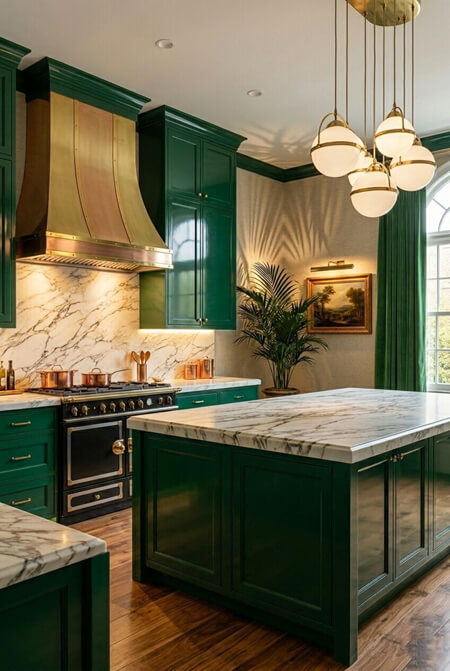
To find an approximate correct size of a chandelier for your room, add the width of your room in feet to the length of the room in feet. For example, a 10 foot by 12 foot room would be 22. That number would be the diameter in inches of a chandelier for that room. Don't be afraid to use more than one chandelier in a room, over a dining table, or over a kitchen island, especially if your dining table or island is a long rectangle. You can also hang pendant light fixtures at different heights in a cluster for more interest.
Look into using LED tape lights #ad in your toe kicks for accent lighting or inside bookcases or cabinets to accent your books & decor.
Make sure to consider the color of your lamp shade. A light colored fabric shade diffuses light while a dark colored shade directs the light up and down for more drama.
Consider using warm dim LED light bulbs #ad that will change the color temperature of your lights to make them warmer like the color of candle light to help you relax at the end of the day.
Motion sensor lights are great for a closet or pantry. Some people like to have motion activated night lights for a bathroom that you visit at night.
Just like designers prefer not to have matching furniture sets, try to also avoid too many matching lamps. Having symmetrical lamps match is fine (such as matching lamps on your nightstands on either side of your bed), but you don't also need the matching floor lamp and chandelier. Try to mix it up and create your own aesthetic.
Make sure to keep your light bulbs dusted for the best light output.
Light bulbs tend to get dimmer as they age, so consider replacing them with fresh bulbs if your room does not feel as bright as you wish.
Layering your lighting doesn't have to mean a big renovation. Start with one room, add a lamp or a dimmer switch, then see how much of a difference it makes. Once you experience the impact of layered light, you'll want to do it everywhere.
Other articles you might like......