Look around any room in your home and you'll spot metal everywhere - your appliances, plumbing fixtures, lighting, door knobs, cabinet hardware, picture frames, and more. The finish on all of these elements has a bigger impact on your overall decor than most people realize.
Traditionally, designers stuck to one metal finish per room for a clean, consistent look, however no designers are mixing metal finishes intentionally because it is one of the easiest ways to create a space that feels layered, custom, and anything but builder grade.
If you would like to mix different metal finishes when decorating your home, here are some tips and tricks for making sure the metal finishes in your home look cohesive instead of a collection of mismatched items.
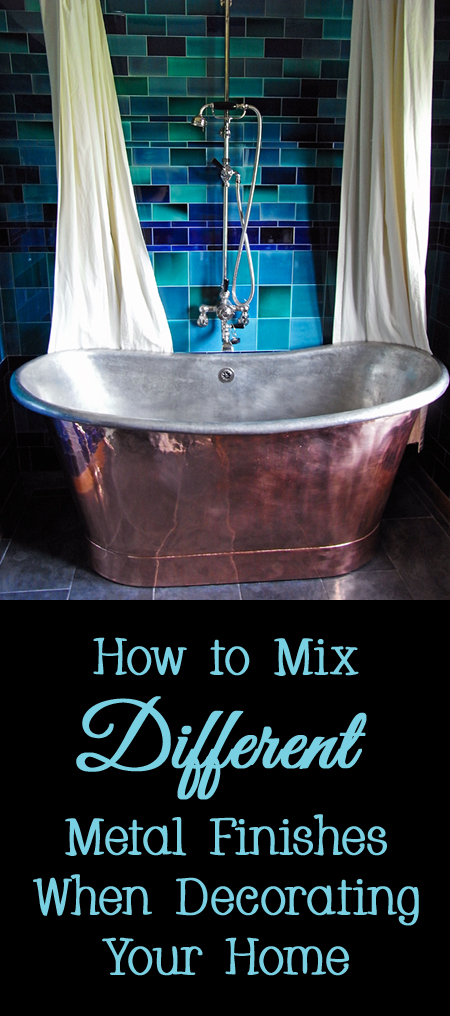 photo courtesy of rogue designs flickr.com/photos/rogueinteriordesigns/4843833866/
Stick with Just Two
When mixing metals in the same room, most designers recommend limiting yourself to two finishes rather than three or more.
The more finishes you introduce, the harder it becomes to make them feel intentional rather than accidental.
That being said, some rooms pull off three beautifully, however just make sure each finish appears more than once so it reads as deliberate.
Choose a Dominant and an Accent Finish
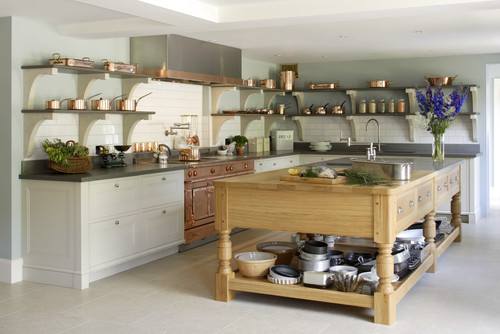
When mixing two metal finishes, it helps to think of them as a dominant finish and an accent finish rather than equals.
Your dominant finish should appear on the larger, more permanent fixtures, such as plumbing, lighting, and appliances.
Your accent finish shows up in smaller, more decorative elements like cabinet knobs, picture frames, and accessories.
This hierarchy is what keeps a mixed metal room feeling intentional rather than random.
A common pairing is matte black as the dominant finish with brushed brass as the accent, or brushed nickel as the dominant finish with gold as the accent.
Door Knobs
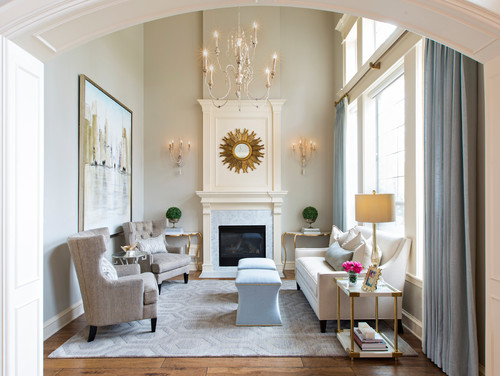
Unlike other hardware, interior door knobs should stay consistent in the same finish throughout the entire house.
Because they appear on every single door, mixing finishes here tends to look unplanned rather than curated.
Lighting Fixtures
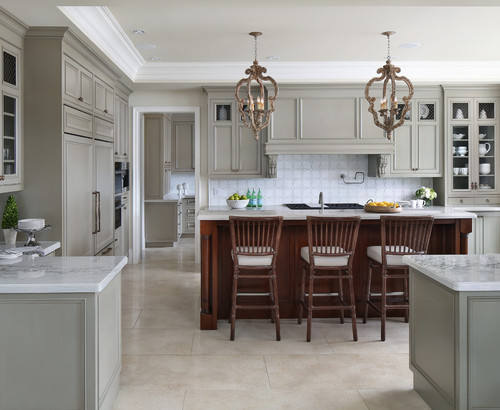
Lighting is one of the most impactful places to introduce your second metal finish.
Because light fixtures sit at eye level or above and draw the eye naturally, they serve as a strong visual anchor for your accent metal.
For example, if your dominant finish throughout a room is brushed nickel, a pendant light or chandelier in matte black or antique brass immediately elevates the space.
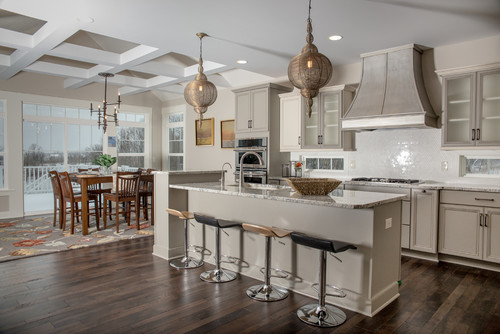
In open concept homes where the kitchen, dining, and living areas flow together, try to keep your lighting finishes consistent across all three spaces so the eye travels smoothly from one area to the next.
Kitchen Appliances
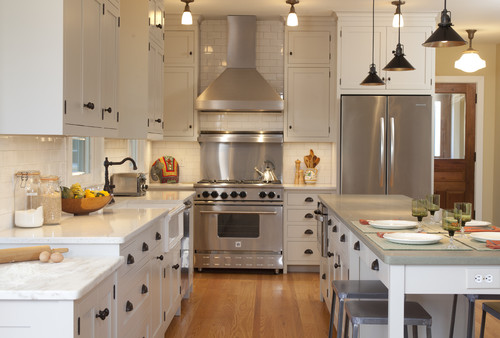
If using metal finish kitchen appliances, try to use the same metal finish throughout the kitchen.
One exception would be a gourmet range used as a unique focal point.
Bathroom Hardware
The bathroom is one of the easiest rooms to experiment with mixed metals because the scale is small and the investment is relatively low.
A common approach is to use one finish for all of your plumbing fixtures including your faucet, shower head, and tub spout.
Use a second finish for your accessories such as towel bars, toilet paper holder, and robe hooks.
Matte black accessories paired with polished chrome plumbing fixtures is a popular combination that feels modern and deliberate.
Just make sure whichever two finishes you choose, both appear at least twice in the room.
Plumbing Fixtures
Plumbing fixtures can vary from room to room - your primary bath doesn't need to match your kitchen faucet.
However, within a single room, all plumbing fixtures should share the same finish to keep things cohesive.
Furniture Hardware
Furniture hardware, such as the pulls and knobs on dressers, nightstands, sideboards, and cabinets, is one of the most overlooked opportunities to tie a room's metal finishes together.
If your room has a dominant finish in brushed gold through its ceiling lighting and lamps, creating a different finish on all of your furniture pulls creates a subtle but satisfying sense of cohesion.
Furniture hardware is also one of the least expensive things to swap out, making it an easy update if you want to bring an older piece of furniture into alignment with a new metal scheme.
Warm Metals vs. Cool Metals
One reliable framework for mixing metals is to think in terms of warm and cool tones.
Warm metals include gold, brass, copper, and bronze.
Cool metals include chrome, nickel, and stainless steel.
As a general rule, mixing within the same temperature family is the safest approach,
Mixing across temperatures can work beautifully too, but it requires more care. If you are going to mix a warm and a cool metal, make sure the two finishes have a strong contrast between them so the combination reads as intentional.
Pairing polished chrome with matte black works because the contrast is sharp and deliberate. Pairing polished chrome with brushed nickel, however, tends to look like a mistake because they are too similar without being identical.
When to Break the Rules
All of these guidelines exist to help you create a space that feels cohesive, but cohesion is not the only goal - personality is.
Some of the most beautiful and interesting interiors break every rule listed here.
If you fall in love with a fixture, a lamp, or a piece of hardware that doesn't match anything else in the room, trust your instincts.
The difference between a room that looks eclectic and one that looks mismatched usually comes down to confidence.
When everything else in the room is thoughtfully chosen, one unexpected metal finish reads as a bold design choice rather than an oversight.
Tip
If you're stuck with builder grade hardware in a finish you dislike but can't afford to replace yet, just paint it. Bathroom hardware and shiny gold fixtures can both be updated with the right spray paint for a fraction of the cost of replacing them.
Other Articles You Might Like.....
How to Decorate in an Eclectic Style That Does Not Look Cheap